


Implant Raw Materials: Grade 4 Cold‑Worked Titanium vs. Grade 4 Pure Titanium
Dental implants are a mainstream solution for tooth loss, and the choice of material directly determines the restoration outcome and long‑term stability. A high‑quality implant must possess three key characteristics: excellent biocompatibility, high strength, and strong corrosion resistance, in order to adapt to the complex oral environment.
Currently, the most widely used materials in the market are Grade 4 pure titanium and Grade 4 cold‑worked titanium. So which one is the ideal choice?
1. Core Definitions and Essential Differences
Grade 4 pure titanium is a medical‑grade pure titanium that has not undergone cold‑working strengthening – it is the basic grade of medical titanium. Grade 4 cold‑worked titanium, on the other hand, is an enhanced version obtained by further processing Grade 4 pure titanium through cold‑working techniques (such as cold rolling or cold drawing). Its chemical composition is identical to that of Grade 4 pure titanium, but its internal structure has been altered. In simple terms, they are “same origin, different process”.
2. One “Cold‑Working” Step Creates a Performance Divide
The production of Grade 4 pure titanium is relatively straightforward: titanium ore is refined into titanium sponge, which is then hot‑worked (e.g., hot forging, hot rolling) into plates or bars, followed by a simple annealing step to relieve processing stresses.
Grade 4 cold‑worked titanium involves an additional critical step: after the hot‑working of Grade 4 pure titanium, a cold‑working process (performed at room temperature without heating, using external forces for extrusion and stretching) is added, followed by low‑temperature annealing. Cold‑working refines the grain structure and makes the material denser, significantly improving mechanical properties. The production cycle is longer, and the processing difficulty and cost are higher.
3. Biocompatibility – Both Are “Body‑Friendly”
Biocompatibility is a key requirement for implant materials, and both materials fully meet it. Grade 4 pure titanium inherently has excellent bio‑inertness and does not trigger rejection when implanted. Since Grade 4 cold‑worked titanium only changes the physical structure without altering the chemical composition, it inherits the biocompatibility advantages of Grade 4 pure titanium and also meets the safety requirements for long‑term implantation. For patients, there is no need to worry about biological safety between the two.
4. Differences in Mechanical Properties
This is the most critical difference, directly affecting implant design and use:
Grade 4 pure titanium: Its advantage is toughness. It has a tensile strength of approximately 550 MPa, is relatively soft, not prone to fracture, can buffer chewing impact forces, and adapts well to complex alveolar bone shapes.
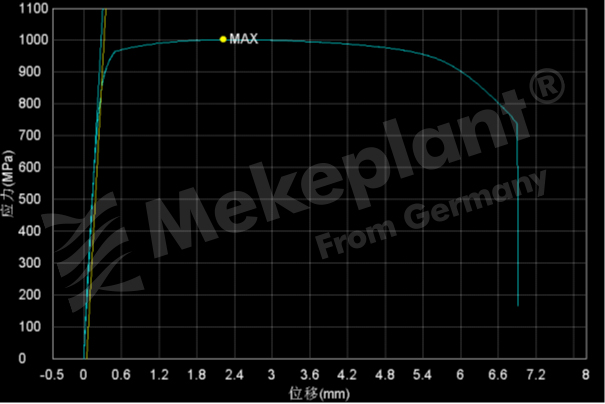
Grade 4 cold‑worked titanium: Its advantage lies in hardness and high strength. After cold‑working and special processing, its tensile strength can reach 1000 MPa, with significantly increased hardness. This “high hardness and high strength” characteristic resists chewing pressure and wear, extending the service life of the component. Mekeplant implants use precisely this enhanced material.
Conclusion
The choice of implant material depends mainly on the patient’s needs and oral health status. In clinical practice, dentists recommend the most suitable implant based on a combination of factors, including oral CT images, bone quality, and the patient’s general health condition. Mekeplant implants offer efficient healing capacity, excellent adaptability to complex cases, durability, and technical reliability. While maintaining German quality, their price is more affordable – a true “value for money” choice – and they have been well received by both doctors and patients since their launch in the domestic market.